
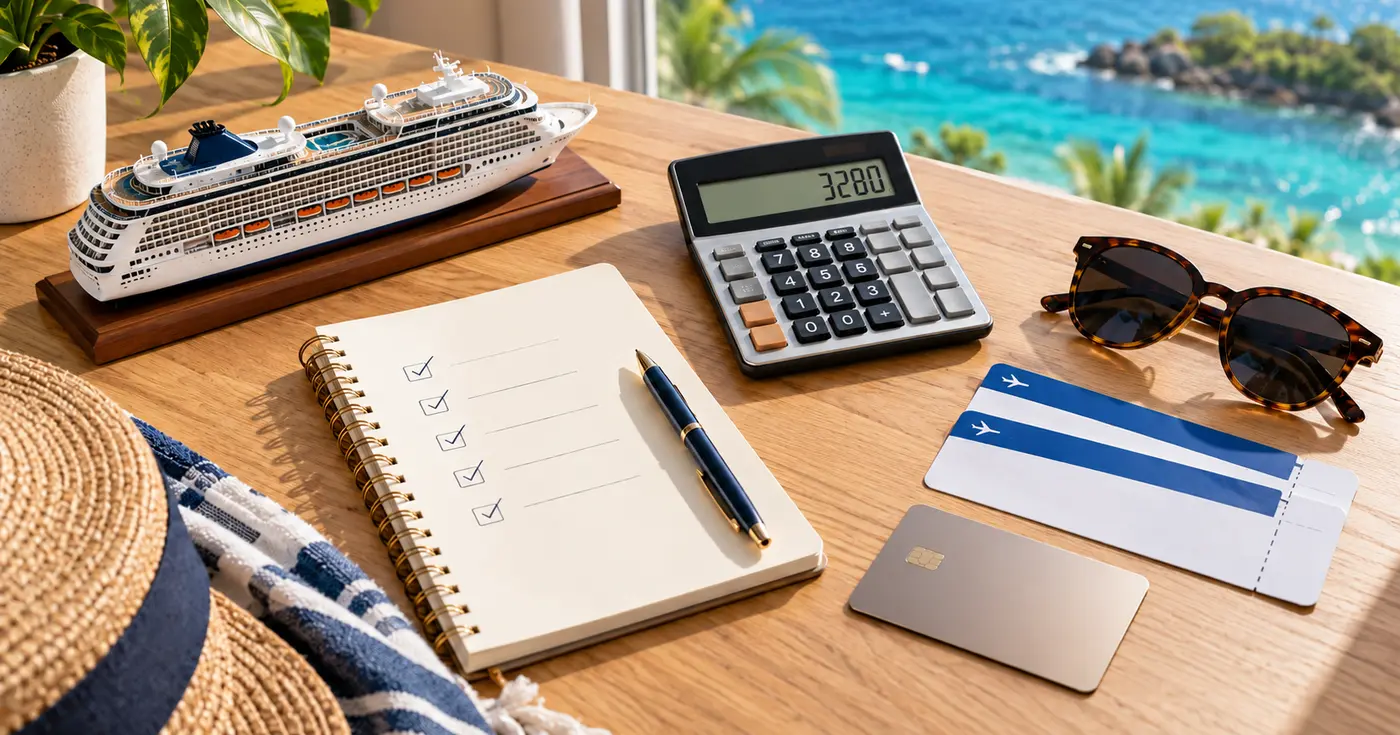
A cruise fare can look wonderfully simple: one cabin, one ship, one week in the Caribbean. Then the planning page opens, and suddenly there are drink packages, dining packages, shore excursions, Wi-Fi, gratuities, insurance, flights, hotels, and a dozen inviting ways to make the trip feel special.
That does not mean a cruise is filled with hidden traps. It means the fare is the foundation, not always the finished vacation. The useful number is not the price in the search result. It is the price of the cruise you actually want to take.
Quick Take
Beyond the advertised fare, plan for taxes and port expenses, daily crew gratuities or service charges, transportation to the port, a possible hotel night, travel protection, shore excursions, and any drinks, Wi-Fi, specialty dining, spa visits, or premium activities you choose. A Caribbean cruise can still offer excellent value, but compare complete trip totals—not opening prices—and price optional packages around your real habits.
Start With What the Fare Already Includes
The base fare does more work than many first-time cruisers realize. Your cabin, transportation between ports, many meals, pools, live entertainment, and a broad mix of ship activities are commonly included. The exact lineup depends on the cruise line and ship.
Royal Caribbean says its standard fare includes the stateroom, complimentary dining, entertainment, many activities, and access to its private destinations, while beverage packages, specialty dining, excursions, Wi-Fi, spa treatments, arcades, bingo, and casino play are optional. Norwegian’s current fare-inclusion guide follows a similar pattern: accommodation, complimentary dining, most entertainment, pools, hot tubs, and fitness facilities are included; service charges, specialty restaurants, many beverages, Wi-Fi, excursions, transfers, hotels, and medical services are not.
This is why two travelers on the same ship can finish with very different totals. One may eat in included restaurants, drink water and regular coffee, explore ports independently, and spend little onboard. Another may build the vacation around cocktails, specialty dinners, a private beach experience, streaming Wi-Fi, and spa time. Neither is doing cruising incorrectly.
Before buying a package, look at what your exact ship already provides. A newer ship may have more included casual dining and activities than an older ship in the same fleet. Our Royal Caribbean vs. Norwegian comparison shows why the ship and current inclusions matter more than a cruise-line stereotype.
The First Layer: Taxes, Port Expenses, and the Trip to the Ship
The number displayed early in a cruise search may not be the final booking total. Government taxes, port expenses, and fees can appear separately, and cruise contracts define the fare differently. Royal Caribbean’s current U.S. guest terms, for example, say its cruise fare excludes taxes and fees as well as shoreside expenses. Read the complete price summary for the actual cabin and guests before comparing one sailing with another.
Then zoom out from the cruise itself. Your real vacation begins at home, so include airfare or driving costs, checked bags, airport transportation, port parking, meals in transit, and—when sensible—a hotel before embarkation. Flying in the day before costs more than arriving the morning of the cruise, but it also creates breathing room when flights are delayed.
A drive-to port can change the equation. For travelers who can reach Galveston comfortably, our guide to cruising from Galveston covers the drive-to advantage and arrival planning. The same principle applies nationally: compare the entire door-to-ship journey, not just the fare from one departure city.
Daily Gratuities Are Small Per Day and Meaningful Over a Week
Most mainstream cruise lines automatically add a daily gratuity or service charge unless it was prepaid or included by a specific fare or promotion. Because the amount is quoted per guest, per day, it can be easy to underestimate at first glance.
As checked on October 15, 2026, a seven-night cruise for two adults in a standard cabin would produce these daily-service totals under the lines’ published rates:
- Carnival: $238 at $17 per guest, per day.
- Royal Caribbean: $259 at $18.50 per guest, per day.
- Celebrity: $273 at $19.50 per guest, per day.
- Norwegian: $280 at $20 per guest, per day for Club Balcony Suites and below.
Suite and premium-category rates are higher. Carnival currently lists $19 per guest, per day for suites; Royal Caribbean lists $21; Celebrity lists $20.50 for Concierge and AquaClass and $24.50 for The Retreat; and Norwegian lists $25 for The Haven and suites. Policies, eligible ages, currencies, and rates can change, so verify the booking confirmation for your sailing.
Also remember that the daily charge is not always the only gratuity. Cruise lines commonly add a separate percentage to beverage packages, drinks, specialty dining, spa services, or room service. Royal Caribbean currently adds 18% to many beverage and specialty-dining purchases and 20% to spa and salon purchases. That percentage may appear at checkout or on the onboard account, so confirm whether the price in front of you already includes it.
Drinks: Buy for Your Habits, Not the Idea of Vacation
A beverage package can make spending predictable, but predictable is not automatically cheaper. Start with what you truly drink in an ordinary vacation day: coffee, bottled water, soda, cocktails, wine at dinner, and anything you would buy ashore. Then compare the package’s full-voyage cost—including gratuity—with buying those drinks individually.
Package rules matter. Royal Caribbean says pricing varies by cruise, its packages are sold for the full voyage, and all guests of legal drinking age in the same stateroom generally must buy the Deluxe package when one does. Its beverage-package guidance also lists exclusions, including licensed Starbucks locations. A headline sale percentage is less important than the final checkout total and what is actually covered.
Promotional bundles deserve the same careful reading. Norwegian’s current Free at Sea offer can include drinks, specialty dining, 150 Wi-Fi minutes for each guest, and a $50 shore-excursion credit for the first guest on eligible tours. Applicable package gratuities are prepaid, and the number of dining meals depends on sailing length. Valuable? It can be. Completely cost-free or identical for every guest? No.
If you mostly drink included water, tea, regular coffee, and select juices, skipping a package can keep the cruise remarkably close to the base experience. If you enjoy several premium drinks daily and value a settled bill, the package may fit beautifully. Price the person, not the promotion.
Wi-Fi and Specialty Dining Can Quietly Become a Second Package Layer
Many travelers want enough internet to check messages or handle a quick work issue. Others want to stream, post video, or keep several devices connected. Those are different needs with different prices.
Check whether your fare or promotion includes minutes, one-device access, or unlimited service. Then decide who truly needs it. One connected device is different from one connected person: some plans allow switching the connection between devices but not using them simultaneously. Ship, itinerary, satellite coverage, and weather can also affect performance.
Specialty dining works the same way. Complimentary restaurants are not a consolation prize; they are a major part of the fare. Buy specialty meals because the venue itself sounds exciting, not because you assume the included dining will be inadequate. Royal Caribbean notes that dining-package prices vary by ship, package, and sailing length, while premium menu items can still carry an upcharge even with a package.
One celebratory dinner may give you everything you want from specialty dining. On another trip, trying several restaurants may be central to the fun. The right number is personal.
Shore Days Can Cost Almost Nothing—or Rival the Fare
Excursions are often the largest flexible expense because every port presents a new invitation. A guided reef trip, over-water cabana, private driver, resort day pass, or mainland ruins tour can reshape both the day and the budget.
Begin with the itinerary as a whole. You may want one signature excursion, one independent beach day, and one easy walk through town rather than a paid tour in every port. In Cozumel, for example, travelers can choose everything from a simple San Miguel afternoon to a reef trip, Punta Sur outing, or mainland adventure. Our one-day Cozumel guide explains the timing and tradeoffs.
Ship-sponsored excursions usually cost more than arranging a comparable day independently, but the comparison is not only about price. Consider transportation, admission, equipment, cancellation terms, operator credentials, and what happens if a tour runs late. For long transfers or ferry-dependent plans, the cruise line’s return arrangements may justify the difference.
Private-island calls can be budget-friendly when included beaches, loungers, dining, and ship-based drink packages meet your needs. Premium beach clubs, waterparks, cabanas, and special activities are optional. Decide whether the upgrade improves your day enough to earn a place in the budget.
Travel Protection Is Not Just Cancellation Coverage
Travel protection adds cost before the trip, but the least glamorous line in the budget can become the most important. Compare policies rather than selecting a box without reading it. Trip cancellation, interruption, delay, baggage, medical care, and emergency evacuation are different benefits with different limits and exclusions.
The U.S. Department of State says the U.S. government does not pay citizens’ medical costs abroad, Medicare and Medicaid generally do not cover care outside the United States, and travelers should consider medical and evacuation coverage. Its travel-insurance guidance recommends checking existing health, homeowner, and credit-card benefits before buying supplemental coverage.
Coverage for preexisting conditions, activity exclusions, purchase deadlines, and “cancel for any reason” benefits varies widely. Compare the policy language with the nonrefundable parts of your vacation, not merely the cruise fare.
Build the Budget in the Order You Will Actually Spend It
A clean cruise budget needs only a few lines:
- Cruise fare, taxes, port expenses, and daily gratuities.
- Transportation, baggage, parking, and pre- or post-cruise hotel.
- Travel protection.
- Drinks, Wi-Fi, and specialty dining.
- Shore excursions and port-day spending.
- A personal allowance for spa, shopping, photos, casino play, or premium activities.
Price those categories for every traveler, then add a modest cushion. Do not double-count an item already included in a bundle, and do not call a promotional benefit “free” until you have checked its gratuities and conditions.
Cabin choice belongs in this same conversation. A balcony may be worth paying more for on a scenic or sea-day-heavy itinerary, while an interior can free money for experiences ashore. Our guide to whether a Caribbean cruise balcony is worth it helps put that tradeoff in practical terms.
The Real Cost Is the Vacation You Choose
A Caribbean cruise can be wonderfully economical, comfortably upgraded, or unapologetically extravagant. The ship will not force every extra into your account. The choices happen one package, dinner, excursion, and upgrade at a time.
Start with the included experience. Add the things your travelers will genuinely use. Compare complete totals across ships and fare types. That is how a low opening price becomes an honest budget—and how a more expensive fare can sometimes become the better value.
Tell CPosey Travel what you want the cruise to include, and we will help you compare the cabin, itinerary, current fare options, packages, and shore plans as one complete vacation. The goal is not simply to find the smallest price. It is to know what the trip will really cost before the Caribbean is already on the horizon.