
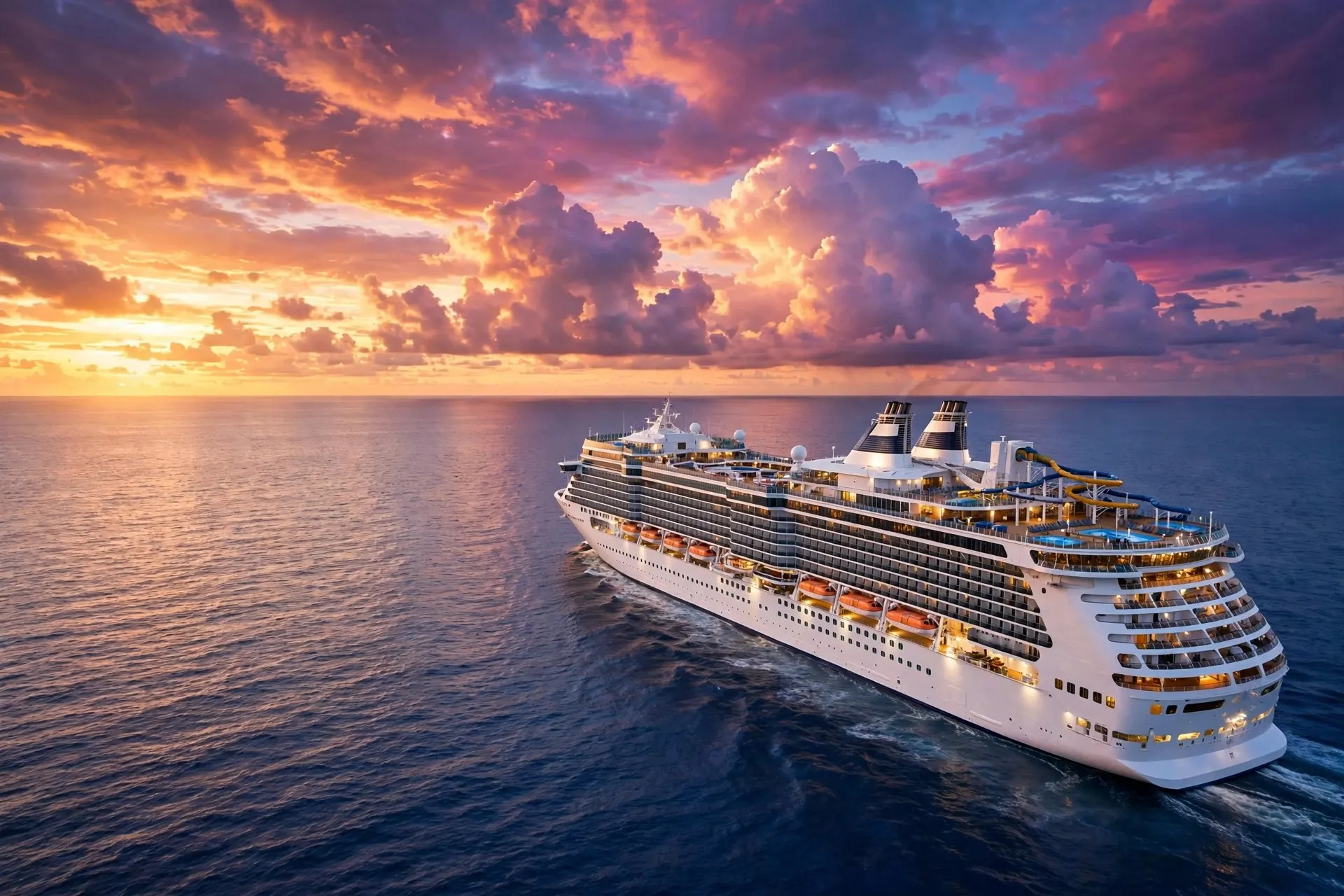
The moment you decide to take your first Caribbean cruise, the possibilities arrive all at once. One ship has a water park high above the sea. Another promises quiet mornings, long dinners, and a balcony made for watching islands come into view. Then there are dozens of ports, cabin categories, dining packages, and prices that seem to change every time you look.
That variety is one of cruising’s greatest strengths, but it can make the first decision feel harder than it needs to be. The goal isn’t to find the cruise everyone else calls the best. It’s to choose the vacation that fits the way you want to spend a week.
The Quick Take
For your first Caribbean cruise, begin with the experience you want—not the cruise line. Choose a comfortable trip length, decide whether beaches or active port days matter more, and compare the exact ship, cabin, fare inclusions, and total trip cost. A seven-night Eastern or Western Caribbean sailing is a comfortable starting point for many travelers, but the right choice depends on your pace, budget, departure city, and travel companions.
Start with the feeling, not the logo
Picture an ordinary day on the vacation you’re trying to create. Are you up early because you cannot wait to snorkel over a reef? Are the kids already talking about waterslides? Would you rather sleep in, linger over breakfast, and find a quiet place where the horizon is the main event?
Those answers are more useful than beginning with a cruise-line commercial or a list of ship rankings. Two ships can visit the same islands and produce completely different vacations. One may feel like a lively floating resort, with a packed schedule and large-scale entertainment. Another may put more emphasis on food, service, adult spaces, or an unhurried evening.
Before comparing prices, choose two or three priorities. Maybe they are family activities, good live entertainment, a relaxed atmosphere, flexible dining, or the chance to visit a particular island. Keep those priorities in front of you. A ship with more features isn’t automatically a better fit if most of those features will go unused.
Choose the Caribbean you actually want to explore
The words Caribbean cruise describe several different kinds of itineraries. The region you choose shapes the rhythm of the week as much as the ship does.
Western Caribbean sailings commonly include ports in Mexico, Honduras, Belize, Jamaica, or Grand Cayman. They can be a strong fit when you want snorkeling, reefs, Mayan history, jungle adventures, or an easy beach day. Travelers who can drive to Galveston may also find the journey simpler; our Galveston cruise planning guide explains the port, parking, documents, and travel-day considerations.
Eastern Caribbean itineraries often lean toward island-hopping, beaches, shopping, and scenic days in places such as St. Thomas, St. Maarten, Tortola, or Puerto Rico. Southern Caribbean cruises can reach Aruba, Bonaire, Curaçao, Barbados, or St. Lucia, often with longer sailings or a departure from San Juan.
Our Eastern versus Western Caribbean guide is a useful place to compare the regions. The important part is to read the complete itinerary, including arrival and departure times. A port name alone doesn’t tell you how much of the day you’ll have ashore or how far your preferred activity is from the pier.
Let sea days set the pace
Sea days aren’t empty spaces between ports. They are the days when the ship becomes the destination: a slow breakfast, a pool afternoon, a show, or simply time to do very little.
If you like a busy vacation, several port days may sound perfect. If constant early mornings leave you needing a vacation from your vacation, look for more breathing room. First-time cruisers sometimes focus so heavily on collecting destinations that they forget to consider the pace of the week.
Pick the exact ship—not just the cruise line
Cruise lines operate ships built in different decades, sizes, and styles. Even within the same brand, the pool deck, entertainment, restaurants, cabin design, and amount of open space can vary widely. The line gives you a general direction; the ship is where you’ll actually live for the week.
Look at the deck plan and the current page for the specific vessel. Which dining venues are complimentary? Which activities cost extra or require reservations? Is there a children’s program for the ages traveling with you? Are the shows and public spaces things your group will use?
This is also where advertised value needs a closer look. Royal Caribbean says its base fare includes the stateroom, complimentary dining in multiple venues, entertainment, and many activities, while specialty dining, Wi-Fi, beverages, spa services, and shore excursions are optional extras. Norwegian’s fare guide likewise separates included accommodations, complimentary meals, and entertainment from items such as service charges, specialty restaurants, alcohol, internet access, and excursions. The details vary by line, package, ship, and sailing, so compare what your booking includes rather than assuming every cruise works the same way.
Give your first cruise enough time to feel like a vacation
A three- or four-night sailing can be a fun introduction, especially when time or budget is tight. The tradeoff is that the trip can feel like it ends just as you learn the ship and settle into its rhythm.
For many first-time Caribbean cruisers, six to eight nights creates a comfortable balance. There is time to enjoy the ship, visit more than one destination, and recover from travel without committing to a long voyage. That is a planning recommendation, not a rule. A shorter sailing that fits your calendar and budget is better than a longer cruise that creates stress before you even leave home.
Pay attention to the full vacation, too. A seven-night cruise may require nine nights away once flights and a pre-cruise hotel are included. If you fly to the embarkation city, arriving at least a day early gives you a buffer against delays and lets embarkation morning begin without a race against the clock.
Choose a cabin for the way you’ll use it
An interior cabin can preserve more of the budget for excursions and experiences. An ocean-view cabin brings in natural light. A balcony gives you private outdoor space, while suites may add more room and benefits that differ by ship and category.
There isn’t one correct first-cruise cabin. If you expect to be out exploring from morning until night, paying more for private space may not improve the trip very much. If quiet coffee outside or a place to retreat is part of the dream, the upgrade may matter every day.
Location deserves as much attention as category. A room close to the elevator can be convenient, while one under a pool deck, gym, theater, or late-night venue may hear more activity. Travelers concerned about motion often prefer a cabin lower and closer to the ship’s middle. The CDC’s motion-sickness guidance notes that avoiding locations with the greatest movement and keeping a visual reference to the horizon can help some travelers. If you have medical questions or take other medications, discuss prevention with a healthcare professional before the trip.
Compare the real vacation cost
The number on the search-results page is a starting point, not the whole vacation. Build a simple total that includes transportation to the port, a hotel if needed, gratuities or service charges, excursions, beverages, specialty dining, Wi-Fi, parking, travel protection, and any cabin upgrade you are considering.
This doesn’t mean you need every package. In fact, first-time cruisers sometimes spend more by trying to pre-purchase the complete experience before knowing what they will use. Begin with what is already included, then add the pieces that genuinely improve the trip.
Compare like with like. A lower fare with several paid extras can cost more than a higher fare that includes something you planned to buy anyway. On the other hand, an inclusive package has little value if you won’t use its benefits. The best price is the one attached to the right vacation, with the likely extras visible before you book.
Handle documents before the excitement takes over
Travel documents should never be a last-week task. Requirements depend on citizenship, itinerary, departure and return ports, and the cruise line’s rules.
U.S. Customs and Border Protection explains that eligible U.S. citizens on certain qualifying closed-loop cruises may use acceptable proof of citizenship and government-issued photo identification instead of a passport. That exception isn’t universal, and a destination or cruise line may still require a passport. The U.S. Department of State strongly recommends a passport book for cruise passengers, even when it isn’t required, because an emergency could mean flying home from another country.
Confirm every traveler’s exact requirements before paying a nonrefundable amount. Names on reservations and documents should match, and passports should meet the validity rules for the entire itinerary. Travel protection also deserves a real conversation: read what is covered, what isn’t, and whether your health insurance applies outside the United States.
A good first cruise should feel like yours
The best first Caribbean cruise isn’t necessarily the newest ship, the lowest fare, or the itinerary with the most ports. It is the one where the ship matches your energy, the islands match your curiosity, the cabin supports your comfort, and the total cost still feels good after the extras are counted.
Once those pieces line up, the planning becomes much more enjoyable. You stop scrolling through hundreds of sailings and start imagining your mornings, your port days, and that first evening when the shoreline slips away behind the ship.
If you’d like help narrowing the choices, tell CPosey Travel what you want from the vacation. I’ll help you compare the ships, itineraries, cabins, and total trip costs so your first cruise feels exciting for the right reasons.