
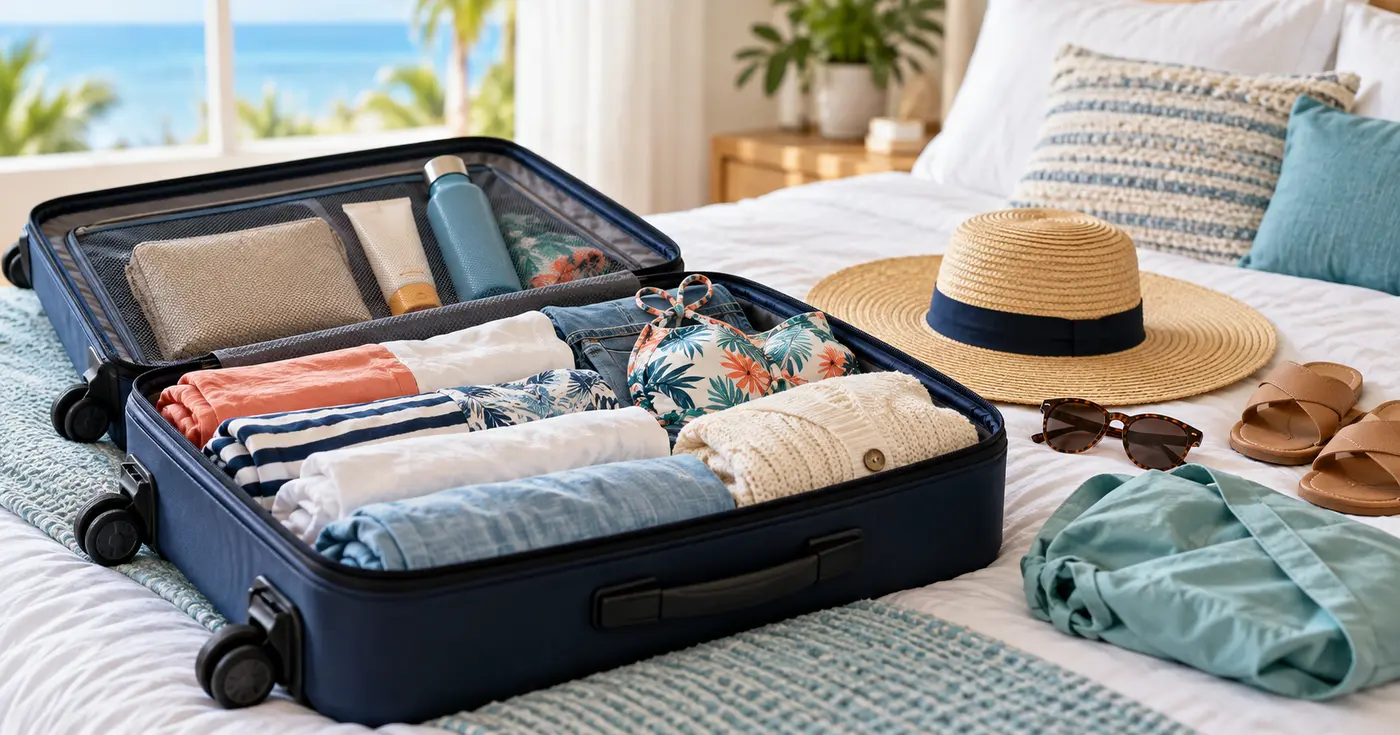
An empty suitcase makes a Caribbean cruise feel close enough to touch. Then the questions begin. How many dinner outfits belong beside the swimsuits? Will the ship have a hair dryer? Does that favorite power strip pass security? And what needs to stay with you when the larger bags disappear with a porter?
A useful Caribbean cruise packing list should make the vacation lighter, not move half your closet onto the ship.
Quick Take
Pack a small, repeat-friendly resort wardrobe, two comfortable swimsuits, a light layer, excursion-ready shoes, sun protection, and one boarding-day carry-on with documents, medication, valuables, and a change of clothes. Check your specific cruise line’s current prohibited-item and beverage policies before closing the suitcase. Leave irons, steamers, extension cords, and “just in case” clutter at home, and let the itinerary decide the rest.
Let the Itinerary Pack the Suitcase
The Caribbean may suggest one endless beach day, but a cruise can move through several kinds of vacation in a week. A morning reef trip calls for different shoes than an afternoon in old San Juan. A breezy sea day feels different from a humid walk to a fort, and an air-conditioned dining room can make a light sweater surprisingly welcome.
Begin with the complete itinerary and the experiences you have actually booked. Look at the number of sea days, planned beach visits, active excursions, and evenings when you may want to dress up. Then check the seasonal conditions for the region. Our guide to the best time for a Caribbean cruise explains how weather patterns and itinerary regions can shape the trip.
This is the easiest way to avoid both extremes: packing only flip-flops for a day that requires closed-toe shoes, or bringing three “maybe” outfits for every evening.
Build a Small Caribbean Wardrobe That Works Together
During the day, breathable clothing earns its space. Think lightweight tops, shorts or skirts, a casual dress, and a sun-protective shirt or rash guard. Bring two swimsuits if you expect frequent water days; one can dry while the other is in use. A cover-up that can take you from the pool deck to a casual lunch is more useful than something that works only at the water.
For a typical week, choose colors and layers that mix rather than packing a complete new outfit for every hour. A few tops, several bottoms, one light layer, and a couple of dinner looks can create more combinations than the suitcase suggests. Wrinkle-resistant fabrics make the strategy even easier.
Evenings vary by line, ship, venue, and sailing. Resort-casual clothing is widely useful, but theme nights and dressier dinners are not identical across brands. Celebrity’s current what-to-pack guidance, for example, describes casual resort wear for much of the ship and Smart Casual as an alternative for guests who do not participate in Evening Chic. Treat that as a Celebrity example, then read the dining and dress guidance for your own ship.
One polished, repeatable outfit is often more valuable than several pieces that need special shoes, pressing, or constant adjustment. If dressing up is part of the fun, make room for it. If your ideal evening is relaxed, do not pack for a vacation you do not plan to take.
Shoes Should Match the Day, Not Every Outfit
Shoes consume space quickly, so give each pair a job. Most Caribbean cruises can be covered by comfortable walking shoes, sandals for casual time, and water shoes only if the planned beach, waterfall, boat, or snorkel outing calls for them. Add one dressier pair if you will genuinely wear it.
Read excursion restrictions before choosing footwear. A zipline, horseback ride, or active tour may require closed-toe shoes. Ancient sites and historic districts can mean uneven stone, heat, and long walks. A beach club may ask for almost nothing beyond sandals.
Try the shoes before the trip. A brand-new pair that looks perfect beside a dinner outfit will feel much less charming after a long pier, a tender, and several blocks ashore.
Your Boarding-Day Carry-On Is the Most Important Bag
Checked cruise luggage usually leaves your hands at the terminal and may take hours to reach the stateroom. Norwegian’s current packing guidance specifically recommends a carry-on with personal items because checked bags can arrive later, and Royal Caribbean similarly advises a small first-day bag in its pre-cruise checklist.
Keep the things that cannot wait—or cannot be easily replaced—with you:
- Passport or other accepted travel documents, boarding information, and wallet.
- Prescription medication, necessary medical supplies, valuables, and electronics.
- One change of clothes, a swimsuit, sunscreen, and sunglasses.
- Essential toiletries, chargers that comply with the line’s rules, and anything a child will need that afternoon.
If you are flying, the same bag also has to follow airline and security rules. TSA’s 3-1-1 guidance generally limits ordinary carry-on liquids, gels, and aerosols to containers of 3.4 ounces or 100 milliliters inside the required quart-size bag, while medically necessary liquids can qualify for different screening. Check the current TSA instructions and your airline’s baggage rules before leaving home.
Do not put passports, cash, jewelry, medication, or the only copy of an important document in a suitcase you plan to hand over. Our Caribbean cruise passport guide can help you identify the documents to confirm for the exact sailing.
Pack for Sun, Water, and a Few Real-World Surprises
Caribbean light is part of the appeal, and it deserves respect. Pack broad-spectrum sunscreen, a brimmed hat, sunglasses, and a lightweight layer that covers shoulders. A reusable water bottle can be useful aboard and ashore where permitted; check whether the ship requires it to be empty when boarding.
A foldable day bag or small backpack helps with sunscreen, a cover-up, water, and purchases in port. A waterproof pouch can protect a room key and phone near the pool, although no pouch should be trusted beyond its stated rating. A few resealable bags are useful for damp swimwear and sandy items on the trip home.
For health needs, prepare before you sail rather than assuming every familiar product will be available aboard or in port. The CDC’s cruise-travel guidance recommends bringing prescriptions and over-the-counter medicines for the trip plus extra for possible delays, along with items such as sunscreen and insect repellent depending on the destination.
Royal Caribbean’s current medication guidance recommends keeping medication in carry-on luggage, in original labeled prescription containers, with three extra days in case an itinerary changes. Medication laws can differ by destination, especially for controlled substances, so confirm any question with the cruise line, destination authorities, and your healthcare professional before travel.
Cabin Comfort Does Not Require a Bag of Gadgets
Cruise cabins reward tidy packing. A compact toiletry organizer, a few magnetic hooks rated for the items you plan to hang, and a small laundry bag can keep surfaces clearer. Verify that accessories are allowed and use them without damaging the cabin.
The more important step is leaving unsafe electrical equipment at home. Royal Caribbean’s current prohibited-items policy lists clothing irons and garment steamers as prohibited. It also prohibits extension cords, power strips, and multi-plug outlets, while allowing compliant device and USB chargers. Other cruise lines publish their own lists and may categorize electrical accessories differently.
That means an online product labeled “cruise approved” is not approval from your cruise line. Review the policy connected to your reservation shortly before sailing. If you use a CPAP machine, oxygen, injectable medication, or another medical device, contact the line’s accessibility team early rather than improvising with an extension cord at the terminal.
For wrinkles, use the ship’s pressing or laundry service where available, hang clothing in a steamy bathroom, or choose fabric that recovers well. Celebrity’s guidance confirms that its ships provide stateroom hair dryers and do not allow travel steamers or clothing irons, but amenities and policies should still be checked for your line and cabin.
Drinks and Snacks Are a Policy Question
Beverage rules are a perfect example of why a single universal packing list can mislead. Limits can depend on the line, embarkation port, container, guest age, and type of drink.
As of October 22, 2026, Royal Caribbean says each guest of legal drinking age may bring one sealed 750-milliliter bottle of wine or champagne on embarkation day, while beer and hard liquor are not allowed under its guest alcohol policy. Carnival’s U.S. departure policy also permits one sealed 750-milliliter bottle of wine or champagne for each guest age 21 or older, and separately describes limited cans or cartons of nonalcoholic drinks carried aboard.
Those examples are not a promise about another brand—or even a future sailing with the same brand. Recheck the current policy for your cruise before buying drinks for the suitcase. Keep allowed beverages in the required bag, and do not assume bottled water, soda, wine, and spirits follow the same rule.
Packaged snacks can be handy for travel days or dietary needs, but ships have extensive food-safety rules and destinations can restrict what goes ashore. Bring only permitted, sealed items and never carry fresh food off the ship without confirming the rules.
What to Leave Home
The shortest answer is anything prohibited, irreplaceably valuable, or unlikely to be used. Cruise-line security lists commonly exclude weapons, illegal drugs, candles, heating appliances, irons, steamers, and hazardous materials. Destination laws add another layer; an item that is lawful at home may still be prohibited aboard or ashore.
Also leave room for judgment. Several heavy books can become one downloaded library. A full-size bottle may become a travel size. An outfit that needs its own shoes and accessories should probably earn a specific evening on the plan.
Do one final edit after the suitcase is packed. Remove the duplicates, the uncomfortable shoes, and the items included in your cabin that you do not need to carry. Then weigh the bag according to the strictest part of the journey. Norwegian currently lists two checked pieces per guest at up to 50 pounds each, while Celebrity recommends a reasonable amount rather than publishing that same limit. Your airline may be more restrictive than the ship.
Pack for the Vacation You Want to Have
The best-packed suitcase does not contain an answer to every possible problem. It contains what you will wear, what protects your health and documents, and what helps you enjoy the ship and ports you actually chose.
Start with the itinerary. Protect the essentials in your carry-on. Confirm the rules attached to your booking. Then close the suitcase before another “just in case” pair of shoes finds its way inside.
New cruisers can use our first Caribbean cruise guide to connect packing with the ship, cabin, itinerary, and budget. It also helps to arrive in the departure city with breathing room, so luggage and travel delays do not control embarkation day.
If you would like help choosing the sailing before the packing begins, tell CPosey Travel what kind of Caribbean vacation you have in mind. We can compare the ship, route, cabin, and practical details so the suitcase fits the adventure—not the other way around.
Packing starts with the itinerary: my Caribbean destination guides show what a port day in each region actually looks like, so the suitcase matches the trip.