
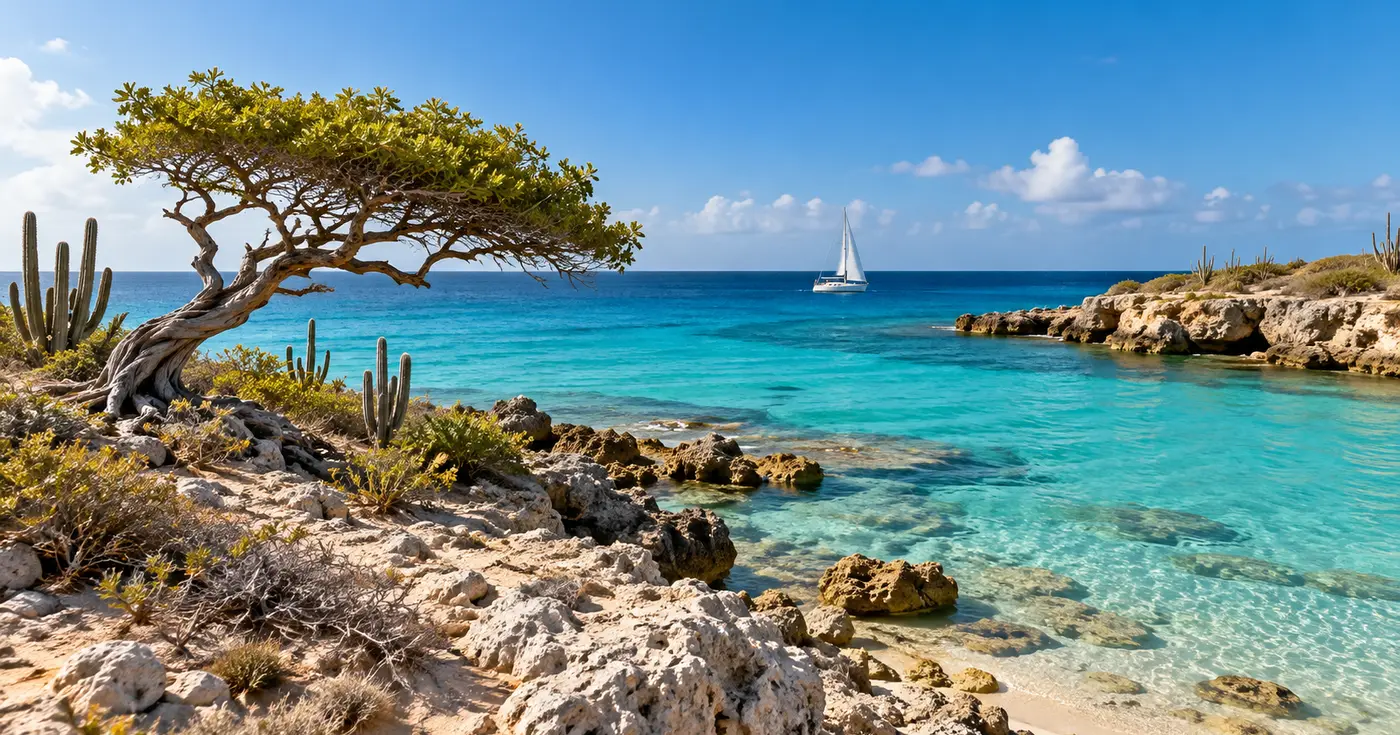
Some Caribbean itineraries feel like a string of beautiful beach days. An Aruba, Bonaire, and Curaçao cruise feels more like three related islands introducing themselves one by one. The water carries that unmistakable turquoise glow, but the shoreline is dry and wind-shaped. One morning may begin with Aruba’s broad sand; the next with a mask and snorkel in Bonaire; the third beneath Curaçao’s colorful waterfront.
That variety is the charm of the ABC islands—and the reason to choose them deliberately. A Southern Caribbean cruise reaches farther than many familiar seven-night routes from Florida, so it often asks for more sea time, a flight to San Juan, or a longer vacation. In return, the port days feel wonderfully distinct.
Quick Take
An Aruba, Bonaire, and Curaçao cruise is a strong choice if you want clear water, snorkeling or diving, sunny arid landscapes, and three ports with noticeably different personalities. Aruba is easiest for a classic beach day, Bonaire rewards water-focused travelers, and Curaçao blends a walkable historic city with coves and reefs. Choose another route if your priority is the shortest sailing, the fewest travel logistics, or a ship-heavy week with fewer consecutive port days.
Why an ABC Islands Cruise Feels Different
Aruba, Bonaire, and Curaçao sit close to the coast of South America, well south of many Eastern and Western Caribbean routes. Their climate and landscape immediately set them apart. Expect trade winds, cacti, pale rock, and a drier horizon rather than the steep, rainforest-covered scenery found on islands such as St. Lucia or Dominica.
Aruba’s tourism authority describes year-round warmth, frequent sunshine, and persistent trade winds, with a wetter period generally running from October through December. Its southern location is outside the main Atlantic hurricane belt, but that should never be translated as hurricane-proof. The National Hurricane Center defines the Atlantic season as June 1 through November 30, and any Caribbean itinerary can be changed when weather or port conditions require it.
The distance also shapes the sailing. A current example is Celebrity Beyond’s eight-night round trip from Miami on July 3, 2027: two sea days south, Aruba, Bonaire, and Curaçao on consecutive days, then two sea days home. Royal Caribbean offers a different pattern on Vision of the Seas from San Juan on December 12, 2027: a seven-night cruise that includes all three ABC ports plus St. Thomas and only two sea days.
Those are examples, not promises that every Southern Caribbean itinerary follows the same design. Ships, dates, ports, and times can change. What they show is the central tradeoff: Florida can make the flight simpler for many travelers but adds distance at sea; San Juan starts closer to the islands but makes the flight part of the decision.
Aruba: The Easygoing Beach-and-Desert Day
Aruba makes an appealing first chapter because it offers several versions of a port day without much explanation. You can head for wide sand and calm water, tour the dry interior, browse Oranjestad, or combine a little of each.
The island’s official beach guide distinguishes the calmer west and south coasts from the windier, rougher north and east. Eagle Beach and Palm Beach suit travelers picturing a classic day of soft sand, swimming, and nearby amenities. Arashi and Boca Catalina add snorkeling possibilities, while the exposed coast and the area around Arikok National Park reveal Aruba’s rocky, cactus-dotted side.
That choice is also Aruba’s planning trap: “beach day” is not specific enough. Palm Beach is lively and resort-oriented. Eagle Beach feels broader and more open. A rugged island tour is a different day entirely, and natural-pool outings may involve rough roads and conditions that are not comfortable for every traveler. Decide whether you want effortless water time or the island’s dramatic interior before comparing excursions.
Some Aruba calls stay into the evening, as both 2027 examples above do. A late departure can create room for dinner or a sunset ashore, but always use the all-aboard time in your cruise app or daily program—not a generic itinerary page—as the clock that matters.
Bonaire: Let the Water Lead
Bonaire is the island that most clearly asks you to meet it on its own terms. Kralendijk is pleasant for a stroll, yet the defining experience lies around the shore. The Tourism Corporation Bonaire highlights more than 85 dive sites, and STINAPA explains that the entire coastline is protected within Bonaire National Marine Park.
For divers, that can make Bonaire the reason to book the cruise. Snorkelers can also have a memorable day, whether they take a boat toward Klein Bonaire or use a guided shore entry chosen for current conditions. The coral shoreline means Bonaire is not always the conventional step-from-powdery-sand beach experience travelers imagine. Water shoes, careful entries, and an operator who matches the site to your comfort level can matter.
The protection of the reef is not background decoration. STINAPA requires visitors entering the water to have the appropriate Nature Fee or cruise-day access and publishes rules including designated entries, leaving marine life untouched, and avoiding sunscreens containing oxybenzone or octinoxate. Check the current STINAPA guidance close to sailing because fees, passes, and procedures can change; a reputable tour operator should also explain what is included.
Travelers who do not snorkel or dive still have options: salt pans, flamingo-viewing areas, wind-shaped landscapes, and Washington Slagbaai National Park show a very different side of the island. The park takes more time and transportation than a casual walk from the pier, so this is a day when a well-timed tour often earns its place.
Curaçao: Color, History, and a Cove Beyond Town
Curaçao gives the itinerary its richest blend of city and sea. From the cruise area, downtown Willemstad is close enough to make an independent walk realistic for many visitors. The Queen Emma Bridge links Otrobanda and Punda, and the waterfront opens into streets of galleries, cafés, markets, museums, and boldly painted architecture.
This is not simply a photogenic backdrop. UNESCO recognizes the Historic Area of Willemstad, Inner City and Harbour for the way Dutch planning, Caribbean climate, regional building traditions, and a multicultural history shaped the city over centuries. Curaçao’s official cruise guide notes that the Mega Cruise Terminal is only a short walk from downtown, making this the easiest ABC stop for a rewarding no-excursion day.
The island’s beaches tell another story. Many are smaller coves along the calmer southern and western coasts rather than one continuous ribbon of sand. A driver or organized tour can pair a cove with viewpoints, the island interior, or a shorter visit to Willemstad. If beach time is the priority, confirm what the admission, chair, transportation, and snorkeling access include; “Curaçao beach day” can describe anything from a full-service club to a quieter rocky bay.
The most satisfying Curaçao plan often has one clear anchor. Spend the day walking Willemstad and eating locally, or choose a cove-and-island tour with a deliberate amount of city time. Trying to collect every colorful street, distant beach, cave, viewpoint, and distillery in one call can turn the island into a windshield.
The Hidden Question Is Pace
ABC itineraries frequently place the three islands on consecutive days. That creates a wonderful sense of discovery, but it also means three alarms, three tour start times, and three afternoons in the sun. If you book a major excursion in every port, the middle of the cruise can feel more athletic than relaxing.
Build contrast into the week. Aruba might be the simple beach day, Bonaire the planned snorkel or dive, and Curaçao the flexible walking day. Or make Aruba the off-road adventure, keep Bonaire gentle, and reserve a driver for Curaçao. The right sequence is less about maximizing attractions than giving each island enough space to feel different.
Sea days matter too. On a Florida round trip, they can create a satisfying beginning and ending around the busy island stretch. If quiet coffee and private outdoor space are part of that picture, our guide to whether a Caribbean cruise balcony is worth it can help you weigh the upgrade. If you would rather direct that money toward three port days, an interior or ocean-view cabin may be the better vacation decision.
Is the Southern Caribbean Right for Your Travelers?
This itinerary fits especially well when the reef matters as much as the sand, when different cultures and landscapes are more exciting than repeating the same beach formula, and when everyone is comfortable with warm weather and an active run of ports. Couples, adult families, repeat Caribbean cruisers, photographers, snorkelers, and divers can all find a compelling reason to go.
It can also be a terrific first cruise—provided you are happy with the added distance and pace. Our first Caribbean cruise guide explains how to compare the exact ship, cabin, and complete vacation rather than choosing by destination names alone.
An Eastern route may fit better if you want a familiar seven-night Florida pattern with beaches, shopping, and island-hopping. A Western route may win if Mayan history, jungle adventures, and ports such as Cozumel are higher on the wish list. Our Eastern versus Western Caribbean comparison is a useful starting point, while the Southern Caribbean destination page shows how the broader region fits together.
Budget for the itinerary you will actually take. Three appealing port days can make excursions and transportation a larger part of the total than expected, especially if diving or private touring is central to the trip. The guide to Caribbean cruise costs beyond the fare helps put those choices beside gratuities, flights, hotels, packages, and insurance before you compare final prices.
A Few Details to Settle Before You Sail
Check the exact port times, excursion cancellation terms, mobility demands, and current marine-park requirements before final payment. Confirm what each traveler needs for the full itinerary and the way you are reaching the ship. The U.S. Department of State strongly recommends a passport book for cruise passengers, even when a cruise may qualify for different documentation, because an emergency flight home requires one.
Most importantly, do not treat the three islands as interchangeable. Aruba is where an uncomplicated beach day shines. Bonaire is where protecting and exploring the water shape the experience. Curaçao is where the city itself can carry the day. That progression is exactly what makes an ABC islands cruise feel like more than a long sail toward warm weather.
If those three mornings sound like your kind of vacation, tell CPosey Travel what you want from the trip. We can compare current ships, departure ports, cabin choices, port times, and excursion styles—and find the Southern Caribbean cruise that fits your travelers instead of asking your travelers to fit the itinerary.